Have you ever been chatting with someone, scrolling through TikTok comments, or reading a Snapchat message when suddenly you see “SM” and think, wait what does that mean? You’re definitely not alone. Internet slang changes fast, and abbreviations like “SM” can have different meanings depending on the conversation.
The first time many people see it, they assume it’s something complicated but it’s actually pretty simple once you know the context.
Quick Answer:
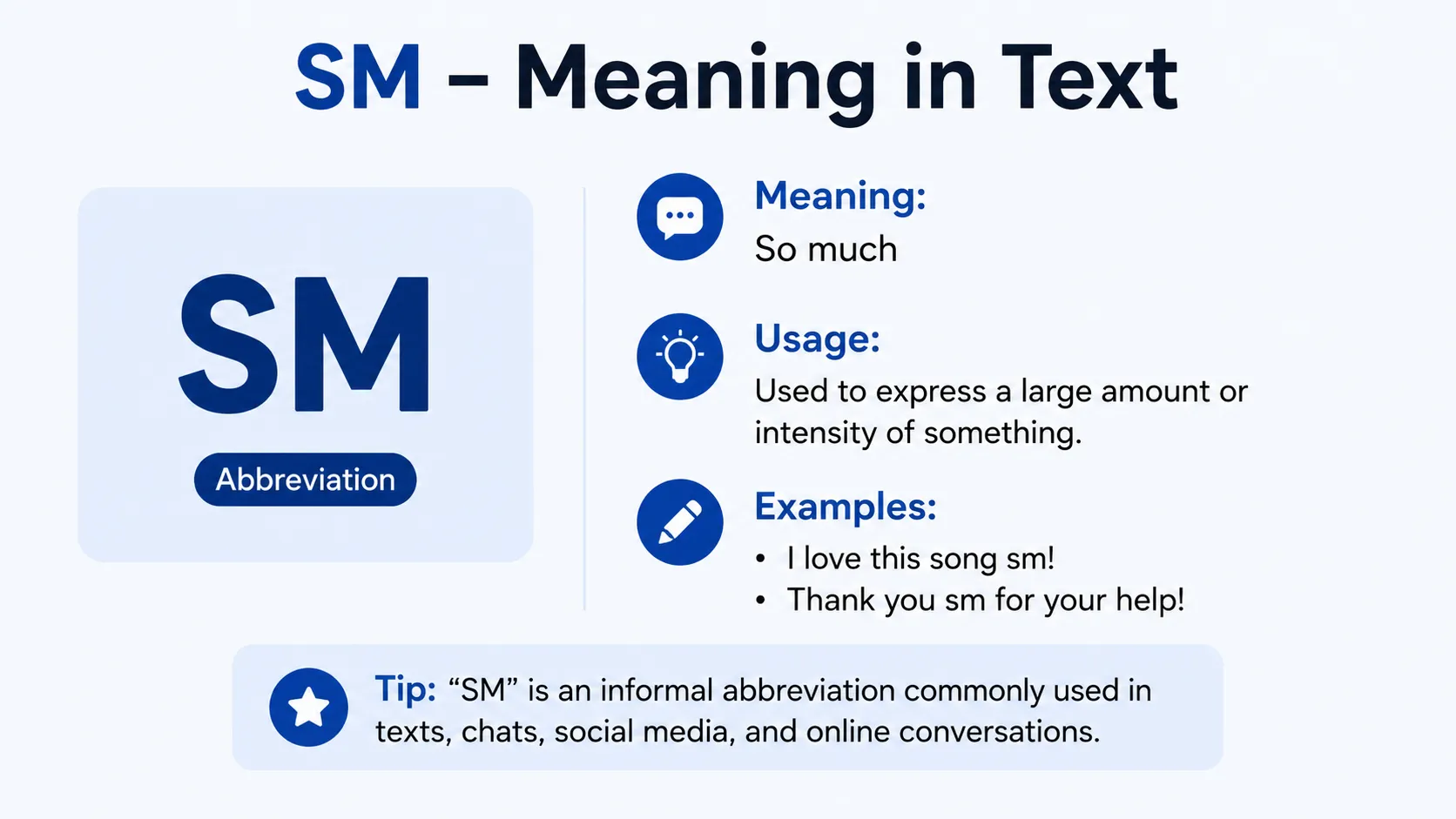
SM usually means “So Much.”
It’s a casual and friendly way of emphasizing feelings, reactions, or quantities in texts and social media conversations.
What Does SM Mean in Text?
In texting, SM most commonly stands for “So Much.” People use it to shorten sentences and type faster in casual chats.
It’s often used to show strong emotions, appreciation, excitement, or exaggeration. Instead of typing “so much,” users just write “sm” because it’s quicker and feels more natural in online conversations.
For example:
- “i miss you sm 😭”
- “thanks sm for helping me!”
- “that movie was sm better than i expected”
In all these examples, SM simply replaces “so much.”
The tone is usually:
- Friendly 😊
- Emotional ❤️
- Casual 📱
- Social-media style 💬
You’ll mostly see it in lowercase (“sm”), but uppercase is also common.
In short: SM = So Much = a quick way to emphasize feelings or intensity in text conversations.
Where Is SM Commonly Used? 📱
“SM” is popular almost everywhere people chat casually online. Since it’s short and easy to type, it fits perfectly into fast-paced conversations.
Here are the most common places where you’ll see it:
- 📲 Text Messages — friends and family use it daily
- 👻 Snapchat — quick replies and streak chats
- 🎵 TikTok Comments — reactions like “i love this sm”
- 📸 Instagram DMs & captions — emotional or supportive comments
- 💬 Discord & gaming chats — casual conversations
- 🐦 X/Twitter posts — short-form messages
- ❤️ Relationship chats — often used affectionately
Is SM Formal or Casual?
“SM” is considered:
- ✅ Casual
- ✅ Social-media friendly
- ✅ Good for friends and online chats
- ❌ Not professional
- ❌ Not ideal for business emails
You probably shouldn’t send your boss a message saying:
“thanks sm for the meeting”
Instead, write:
“Thank you very much for the meeting.”
Examples of SM in Conversation 💬
Here are some realistic examples of how people use “SM” in everyday chats.
Example 1
A: i had such a good time today
B: me tooo sm 😭❤️
Example 2
A: thanks for helping me study
B: ofc! happy to help sm 😊
Example 3
A: do you still like that song?
B: yes omg i love it sm
Example 4
A: i miss hanging out with you
B: same sm 😭
Example 5
A: your outfit looks amazing
B: thank u sm 🥺
Example 6
A: are you excited for the trip?
B: YES sm!!
Example 7
A: sorry i was late
B: it’s okay sm happens lol
These examples show how “SM” helps make conversations feel more emotional, relaxed, and natural.
When to Use and When Not to Use SM
Like most internet slang, “SM” works best in the right setting. Knowing when to use it can help your messages sound natural instead of awkward.
✅ When To Use SM
Use “SM” when:
- Talking with friends casually
- Sending emotional or supportive messages
- Posting on social media
- Reacting quickly in chats
- Flirting or showing affection
- Keeping messages short and informal
Examples:
- “love u sm ❤️”
- “thanks sm!”
- “i’m excited sm omg”
❌ When Not To Use SM
Avoid “SM” in:
- Formal emails
- School assignments
- Professional communication
- Serious conversations
- Customer service messages
- Business presentations
Instead of:
“thanks sm for your response”
Write:
“Thank you very much for your response.”
HRU Meaning in Texting Conversations ❤️
SM Usage Comparison Table
| Context | Example Phrase | Why It Works |
|---|---|---|
| Friend Chat | “miss u sm 😭” | Casual & emotional |
| Relationship Text | “love you sm ❤️” | Sweet & affectionate |
| Social Media Comment | “this song hits sm” | Internet-friendly style |
| Work Chat | “Thank you very much.” | More professional |
| “Please review this when possible.” | Formal & clear |
Similar Slang Words or Alternatives 🔄
There are several other slang abbreviations people use that are similar to “SM.” Some express emotion, while others simply shorten common phrases.
| Slang | Meaning | When to Use |
|---|---|---|
| TYSM | Thank You So Much | Showing appreciation |
| ILYSM | I Love You So Much | Romantic or affectionate chats |
| OMG | Oh My God | Surprise or excitement |
| FR | For Real | Agreeing strongly |
| TBH | To Be Honest | Sharing opinions honestly |
| NGL | Not Gonna Lie | Casual honesty in chats |
These abbreviations often appear together in conversations like:
“ilysm 😭❤️”
“tysm for everything”
“omg this is cute sm”
Internet slang tends to mix naturally in texting culture.
Why Do People Use SM So Often?
One reason “SM” became popular is speed. People want to communicate quickly without typing full phrases every time.
Instead of:
“I appreciate you so much”
They simply type:
“appreciate u sm”
It saves time while still sounding emotional and genuine.
Another reason is tone. Short slang words often make messages feel:
- More relaxed
- More personal
- More internet-native
- Less formal and stiff
Can SM Have Other Meanings?
Yes — although “So Much” is the most common meaning in texting, “SM” can occasionally mean other things depending on context.
Some alternate meanings include:
- Social Media
- Small
- Sad Mood
- Story Mode (gaming)
For example:
- “i’m taking a break from sm” → social media
- “need this shirt in sm” → small
That’s why context matters. In emotional or casual chats, “SM” almost always means “so much.”
Is SM Flirty?
Sometimes, yes! “SM” can sound affectionate or flirty depending on the message.
For example:
- “i miss u sm ❤️”
- “you make me laugh sm”
- “love talking to u sm”
These messages feel warm, caring, and emotionally expressive.
However, “SM” itself is not automatically romantic. It simply intensifies emotion. Friends use it too:
- “thanks sm bestie”
- “i love this sm”
Should You Use SM?
If you text casually or spend time on social media, learning slang like “SM” can make conversations easier to understand and more natural to join.
It’s especially useful for:
- Fast texting
- Emotional reactions
- Friendly chats
- Online comments
- Casual communication
But balance matters. Using too much slang in professional settings can make messages look immature or unclear.
A good rule:
- Casual chats → “sm” is fine ✅
- Professional communication → spell it out ❌
FAQs About SM
What does SM stand for in texting?
SM usually stands for “So Much.”
Is SM positive or negative?
Usually positive, but it depends on the sentence.
Example:
- Positive: “thank u sm ❤️”
- Negative: “this annoys me sm”
Is SM used on TikTok?
Yes, it’s extremely common on TikTok comments and captions.
Can SM be flirty?
Yes. It can sound affectionate in romantic conversations.
Do adults use SM too?
Yes. While younger users use it more often, many adults use it casually online.
Is SM rude?
No. It’s generally friendly and harmless.
Should I use SM in work emails?
No. Use full phrases like “so much” or “thank you very much” instead.
What’s the difference between SM and TYSM?
- SM = So Much
- TYSM = Thank You So Much
Why do people type SM instead of “so much”?
Mostly for speed and convenience in texting.
Is SM always lowercase?
No. Both “SM” and “sm” are common.
Final Thoughts
“SM” is one of those simple internet slang terms that appears everywhere once you notice it. if someone says “love u sm,” “thanks sm,” or “i miss this sm,” the meaning is usually the same: they’re emphasizing emotion or intensity in a quick, casual way.
Now when you see “SM” in texts, TikTok comments, Snapchat messages, or gaming chats, you’ll instantly know what it means and exactly when to use it yourself.

J. K. Rowling is a British author born July 31, 1965, in Yate, England. She wrote the Harry Potter series, one of the most popular book franchises ever. Her stories about a young wizard and his friends made her a global name and changed modern fantasy reading. You can read more about her life and work on meaningdesk.com.
 Mark Twain
  H. G. Wells