
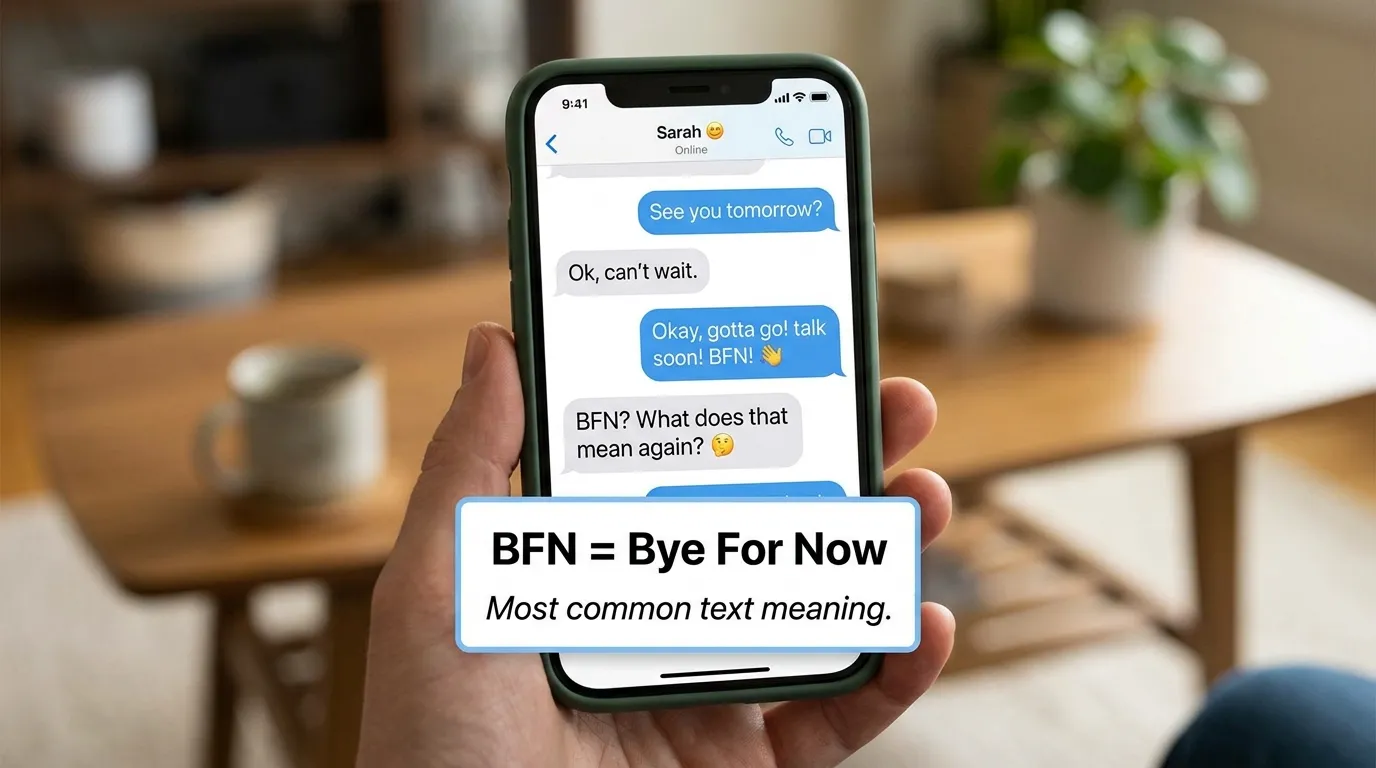
Have you ever been chatting with someone when they suddenly replied with “BFN!” and disappeared? If you’ve never seen it before, you might wonder if it’s an abbreviation, a typo, or even a secret code.
Text slang changes quickly, and it’s easy to get confused by new shortcuts people use in messages, gaming chats, and social media.
The good news is that BFN is simple once you know what it means.
Quick Answer:
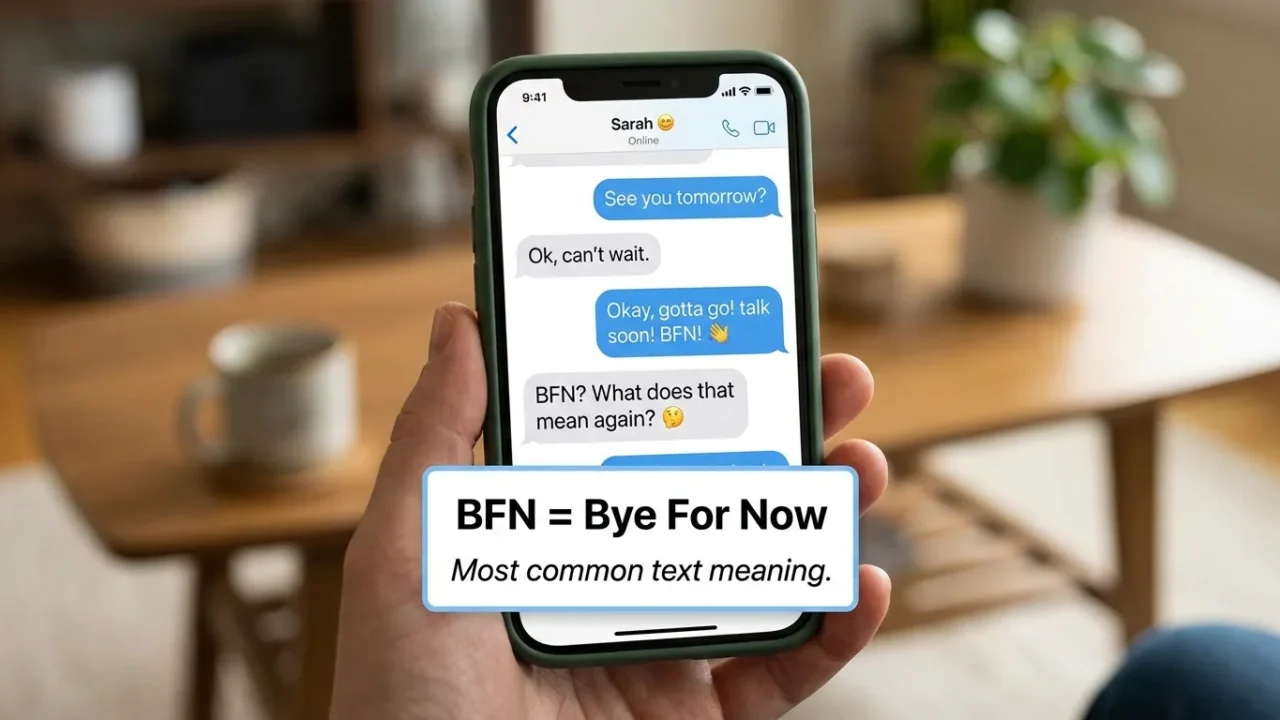
BFN means “Bye For Now.” It’s a friendly and casual way of saying goodbye while letting the other person know you’ll probably talk again later.
What Does BFN Mean in Text?
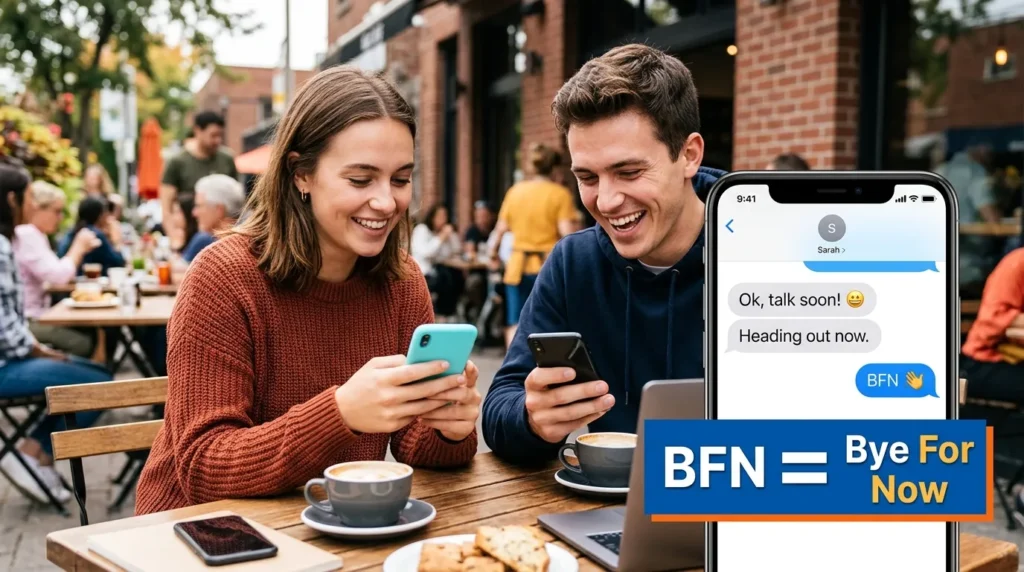
BFN stands for “Bye For Now.”
People use it when ending a conversation without making it sound like a permanent goodbye. It suggests that you’ll likely chat again later, making it warmer than simply saying “bye.”
For example:
Alex: I have to head to work now.
Sam: Okay, BFN! 😊
In this conversation, Sam is simply saying goodbye in a friendly way while expecting to talk again soon.
In short: BFN = Bye For Now = See you later.
Where Is BFN Commonly Used?
You’ll mostly see BFN in casual online conversations, including:
- 📱 Text messages – Quick goodbyes between friends and family.
- 💬 WhatsApp & Messenger – Ending casual chats.
- 👻 Snapchat – Signing off after sending snaps.
- 🎵 TikTok comments & DMs – Casual conversations.
- 📷 Instagram DMs – Friendly goodbyes.
- 🎮 Gaming chats – Leaving a game or voice chat.
- 💻 Discord – Saying goodbye before logging off.
Tone
- ✅ Casual
- ✅ Friendly
- ✅ Social-media friendly
- ❌ Not suitable for formal business emails
- ❌ Avoid in professional workplace communication unless you know the person well.
Examples of BFN in Conversation
Example 1
A: gotta finish my homework 😩
B: alright, bfn! 👋
Example 2
A: dinner’s ready lol
B: enjoy! bfn 😊
Example 3
A: i’m logging off discord now
B: bfn, see u tomorrow 🎮
Example 4
A: thanks for helping me!
B: anytime! bfn ❤️
Example 5
A: i have class in 5 mins
B: good luck! bfn 📚
Example 6
A: heading to bed 😴
B: sleep well, bfn!
Example 7
A: talk later?
B: yep, bfn 👋
When to Use and When Not to Use BFN
✅ When To Use
Use BFN when:
- Talking with friends.
- Chatting with family.
- Ending a casual text conversation.
- Leaving a gaming session.
- Saying goodbye in social media messages.
- You’ll likely speak again later.
❌ When Not To Use
Avoid BFN when:
- Writing business emails.
- Speaking with clients.
- Sending professional work messages.
- Discussing urgent or serious topics.
- Communicating with someone unfamiliar with internet slang.
| Context | Example Phrase | Why It Works |
|---|---|---|
| Friend Chat | “bfn 👋” | Casual and friendly |
| Family Text | “See you tonight, BFN!” | Warm and informal |
| Gaming Chat | “gg everyone, bfn!” | Common gaming farewell |
| Work Chat | “Talk to you later.” | More professional |
| “Thank you for your time.” | Clear and formal |
Similar Slang Words or Alternatives
| Slang | Meaning | When to Use |
|---|---|---|
| BRB | Be Right Back | Short break from chat |
| TTYL | Talk To You Later | Ending a conversation |
| CYA | See You | Casual goodbye |
| GTG | Got To Go | Leaving quickly |
| CU | See You | Informal texting |
| BBL | Be Back Later | Returning after some time |
FAQs About BFN
Is BFN rude?
No. BFN is considered a polite and friendly way to end a conversation.
Does BFN mean goodbye forever?
No. It specifically means “Bye For Now,” suggesting you’ll likely talk again.
Is BFN still used today?
Yes. While it’s not as common as TTYL or GTG, many people still use BFN in texting and online chats.
Can I use BFN on Snapchat?
Yes. It’s perfectly suitable for Snapchat conversations, Instagram DMs, Discord, and text messaging.
Is BFN professional?
Not usually. In workplace communication, it’s better to use phrases like “Talk to you later,” “Have a great day,” or “Best regards.”
What’s the difference between BFN and TTYL?
BFN focuses on saying goodbye for now, while TTYL specifically means you’ll talk later. Both are friendly ways to end a conversation.
Final Thoughts
BFN is a simple, friendly internet abbreviation that means “Bye For Now.” It’s commonly used in text messages, social media, gaming chats, and messaging apps when someone is ending a conversation but expects to reconnect later.
Because it’s casual and warm, it’s a great choice for chatting with friends and family. However, it’s best to avoid using it in formal emails or professional communication where a complete goodbye sounds more appropriate.

Mark Twain was an American author born November 30, 1835, in Missouri. He wrote classics like The Adventures of Tom Sawyer and Adventures of Huckleberry Finn, known for real dialogue and sharp humor. He influenced American literature with his clear style and social insight. Read more about him on meaningdesk.com.
 J. K. Rowling
  H. G. Wells