
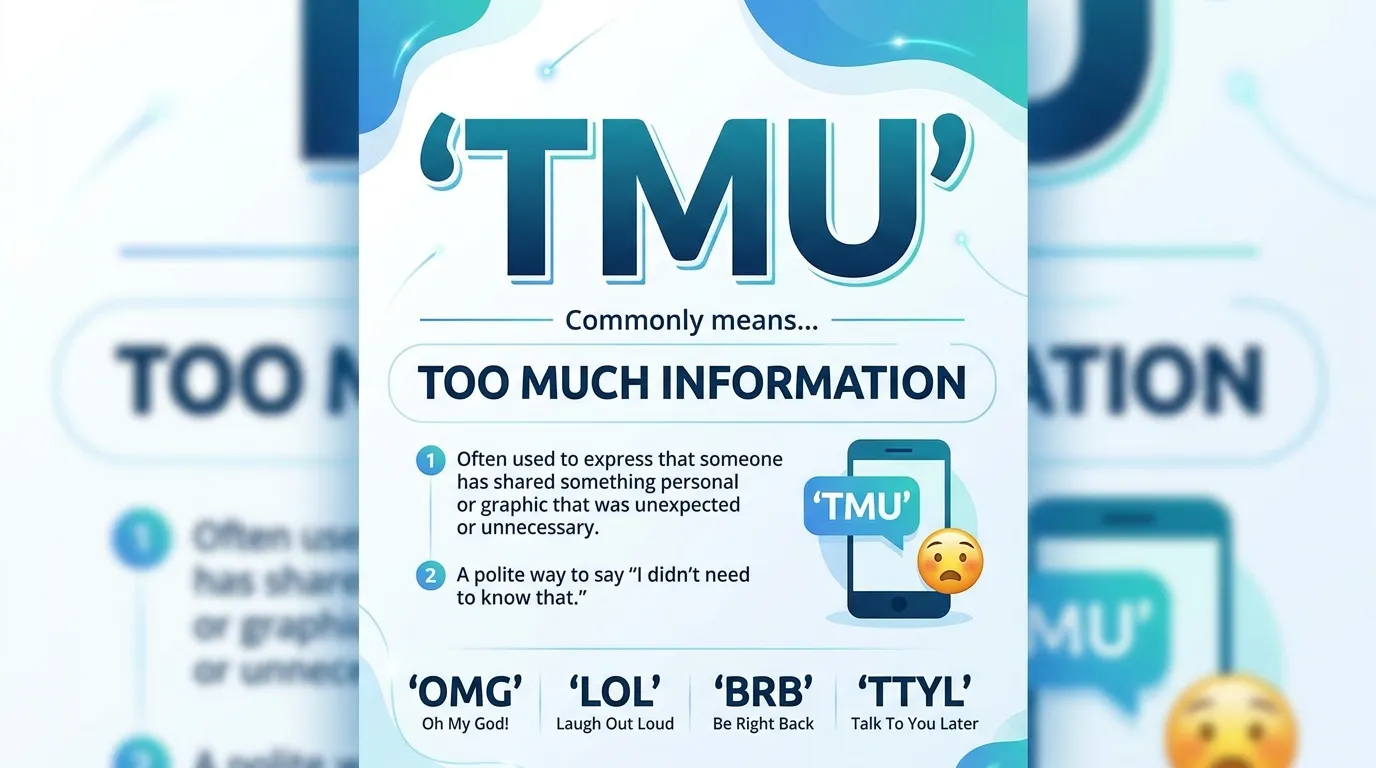
Have you ever received a message that simply said “TMU” and wondered what it meant? You’re not alone.
Texting slang changes so quickly that it’s easy to get confused, especially when someone uses a short abbreviation you’ve never seen before.
Whether you spotted TMU on Snapchat, TikTok, Instagram, or in a text conversation, understanding its meaning helps you reply naturally and avoid misunderstandings.
Quick Answer:
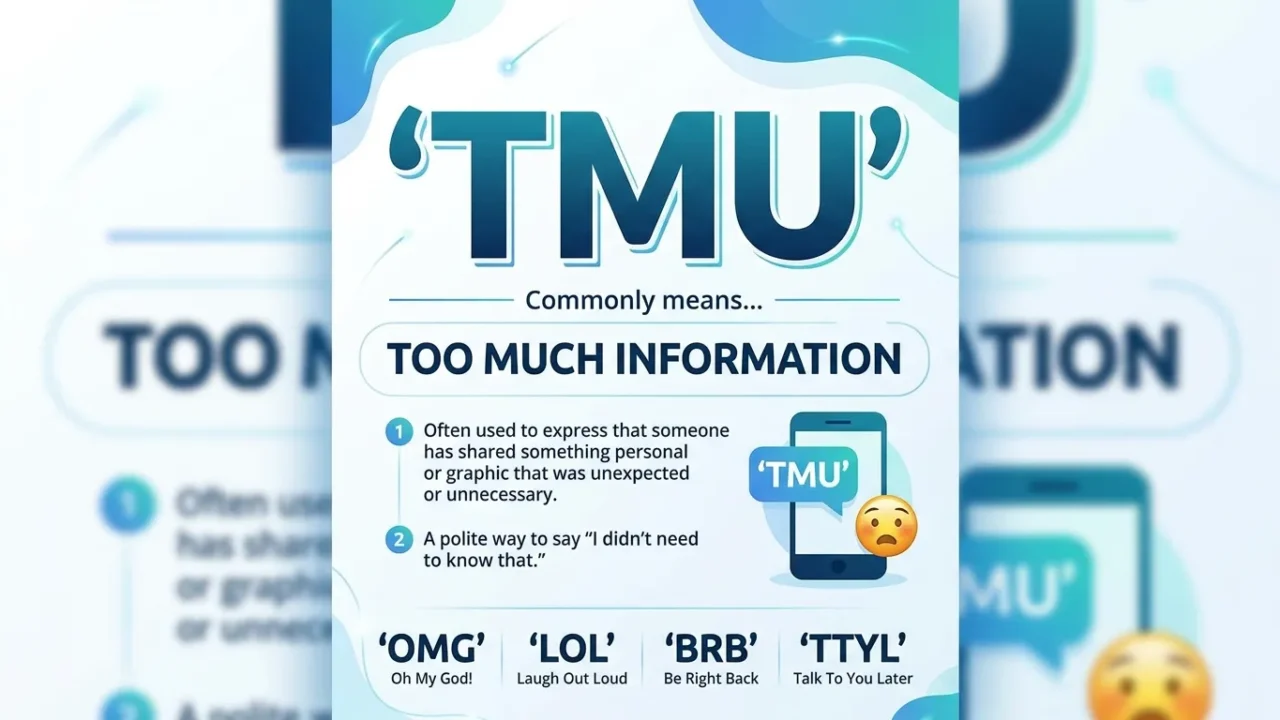
TMU usually means “Text Me Up.” It’s a casual and friendly way of asking someone to send a message later or start a conversation.
People often use it when they want to continue chatting without typing a longer sentence.
What Does TMU Mean in Text?
In texting, TMU most commonly stands for “Text Me Up.” It’s another way of saying:
- Text me later.
- Send me a message.
- Hit me up.
- Message me when you’re free.
Instead of writing an entire sentence, people simply type TMU to save time.
Example:
A: i’m heading out now.
B: ok, tmu when you’re home 😊
Here, TMU means “Text me when you get home.”
In short: TMU = Text Me Up = Send me a message later.
Note: Like many internet abbreviations, TMU can have different meanings in specific industries or organizations. However, in everyday texting and social media, “Text Me Up” is the most common interpretation.
Where Is TMU Commonly Used?
You’ll mostly see TMU in casual online conversations.
📱 Snapchat
- Friends asking each other to message later.
- Quick replies before logging off.
💬 Text Messages
- Everyday conversations.
- Making plans with friends.
🎵 TikTok
- Comments and direct messages.
- Casual chats between creators and followers.
- DMs between friends.
- Replies to stories.
🎮 Gaming Chats
- Asking teammates to message after the game.
- Continuing conversations outside the game.
🌐 Other Social Media
- Discord
- Messenger
- Telegram
Tone
- ✅ Casual
- ✅ Friendly
- ✅ Social-media friendly
- ❌ Not formal
Examples of TMU in Conversation
Example 1
A: gotta leave for work now
B: alright, tmu later 👋
Example 2
A: are you free tonight?
B: busy rn, tmu after 8 😊
Example 3
A: i’ll send the pics tomorrow
B: awesome, tmu when you do!
Example 4
A: heading to the gym 💪
B: nice! tmu when you’re done
Example 5
A: i need your advice 😅
B: sure, tmu anytime
Example 6
A: i’m at school rn
B: ok, tmu after class
Example 7
A: thanks for today ❤️
B: no problem, tmu whenever
When to Use and When Not to Use TMU
✅ When To Use
Use TMU when:
- Talking with friends.
- Chatting casually.
- Making plans.
- Asking someone to message later.
- Using Snapchat or Instagram DMs.
- Texting family members.
❌ When Not To Use
Avoid TMU when:
- Sending work emails.
- Talking to teachers.
- Messaging clients.
- Writing professional documents.
- Discussing emergencies.
- Communicating in serious situations.
Comparison Table
| Context | Example Phrase | Why It Works |
|---|---|---|
| Friend Chat | “tmu later 😄” | Casual and friendly |
| Family Chat | “tmu when you arrive.” | Simple and natural |
| Work Chat | “Please message me when you’re available.” | More professional |
| “Please contact me after reviewing the document.” | Formal and clear |
Similar Slang Words or Alternatives
| Slang | Meaning | When to Use |
|---|---|---|
| HMU | Hit Me Up | Ask someone to contact you |
| DM Me | Direct Message Me | Instagram, X, TikTok |
| PM Me | Private Message Me | Forums and Facebook |
| MSG Me | Message Me | General texting |
| TXT Me | Text Me | SMS conversations |
| BRB | Be Right Back | Temporary pause in chatting |
Is TMU Rude or Offensive?
No. TMU is generally not rude or offensive. It’s considered a polite and friendly abbreviation among friends and people who text regularly.
However, because not everyone understands internet slang, using the full phrase “Text me later” may be a better choice in professional or formal conversations.
Common Mistakes About TMU
People sometimes misunderstand TMU because it’s less common than abbreviations like LOL or BRB.
Some common mistakes include:
- Assuming it has only one universal meaning.
- Using it in business emails.
- Expecting everyone to know what it means.
- Confusing it with other three-letter abbreviations.
When in doubt, consider your audience. If you’re chatting with friends, TMU is perfectly fine. If you’re communicating professionally, write the full phrase instead.
How to Respond to TMU
If someone texts TMU, you can reply in several natural ways:
- Sure, I will!
- Sounds good 😊
- I’ll text you later.
- No problem!
- Will do 👍
- Talk soon!
- See you later!
These replies keep the conversation friendly and relaxed.
Why People Use TMU Instead of Typing the Full Phrase
Text abbreviations are popular because they’re:
- Faster to type.
- Easier on mobile keyboards.
- Common among younger users.
- Great for quick conversations.
- Perfect for social media messaging.
Instead of typing “Text me when you’re free,” someone can simply write “TMU.”
Tips for Using TMU Naturally
If you want your messages to sound natural:
- Use TMU only with people who understand texting slang.
- Pair it with emojis for a friendly tone.
- Don’t overuse abbreviations in every message.
- Switch to full sentences in formal conversations.
- Remember that clarity is more important than being trendy.
FAQs About TMU
What does TMU stand for in texting?
TMU most commonly stands for “Text Me Up,” meaning “send me a message later.”
Is TMU the same as HMU?
They’re similar, but not exactly the same. HMU means “Hit Me Up,” while TMU specifically asks someone to text you.
Is TMU used on Snapchat?
Yes. TMU is commonly used on Snapchat, Instagram, WhatsApp, and regular text messages.
Is TMU formal?
No. It’s an informal texting abbreviation best suited for casual conversations.
Can I use TMU at work?
It’s better to avoid TMU in professional communication. Instead, write “Please message me” or “Please contact me.”
Does TMU have other meanings?
Yes. In certain organizations or technical fields, TMU may represent different terms. However, in everyday texting, it usually means “Text Me Up.”

J. K. Rowling is a British author born July 31, 1965, in Yate, England. She wrote the Harry Potter series, one of the most popular book franchises ever. Her stories about a young wizard and his friends made her a global name and changed modern fantasy reading. You can read more about her life and work on meaningdesk.com.
 Mark Twain
  H. G. Wells