If you’ve ever noticed slanted text in a message, caption, or article and wondered what it means, you’re not alone. Many people search for italics meaning in text because they see it used in chats, social media posts, books, and even professional documents. Italics may look simple, but they carry powerful meaning. They can show emphasis, emotion, titles of works, inner thoughts, or even technical terminology.
In today’s digital world—where tone can easily be misunderstood—formatting styles like italics help add clarity and expression. Whether you’re texting on WhatsApp, writing a caption on Instagram, or preparing a professional document, understanding how italics work can improve communication. This guide breaks down everything you need to know, from basic definitions to how italics are used in different fields like physics, medicine, and aviation.
Meaning & Definition
The italics meaning in text refers to a style of writing where letters are slightly slanted to the right. This formatting is used to distinguish certain words from the rest of the sentence.
In simple terms, italics are used to:
- Add emphasis
- Show titles of books, movies, or artworks
- Represent thoughts in storytelling
- Highlight foreign words
- Indicate technical terms
For example:
- I really didn’t expect that.
- Have you read Harry Potter?
- She thought, This can’t be happening.
Unlike bold text, which makes words heavier and more noticeable, italics are softer but still powerful. They subtly change the tone without being too loud.
In digital communication, italics sometimes replace vocal tone. Since you can’t hear someone’s voice in a text message, formatting helps show what’s important or emotional.
Background
Italics originated during the Renaissance in Italy in the 15th century. The style was developed by printers who wanted a more compact and elegant typeface. Over time, it became a standard typographic feature used worldwide.
Traditionally, italics were used in books to:
- Highlight titles
- Show internal dialogue
- Differentiate foreign phrases
- Emphasize key points
With the rise of digital communication, italics adapted to online platforms. Messaging apps and social media introduced simple formatting tools. For example:
- On WhatsApp, adding underscores around a word (like this) creates italics.
- In Markdown formatting (used on many platforms), using asterisks (like this) creates italics.
Today, italics are no longer limited to printed books. They are widely used in blogs, captions, tweets, and professional documents.
Usage in Different Contexts (Chat, Social Media, Professional Fields)

Understanding italics meaning in text depends on context. The same formatting can serve different purposes depending on where it’s used.
In Casual Chats
Italics often show emotion or emphasis:
- I told you already.
- That was so awkward.
On Social Media
Creators use italics for dramatic effect or storytelling:
- “And that’s when I realized… I forgot my wallet.”
- “Mood: unbothered.”
- Titles of books and journals
- Scientific names (like Homo sapiens)
- Legal case names
In formal settings, italics follow strict style guidelines (APA, MLA, Chicago style).
Meaning in Chat, WhatsApp, Instagram, TikTok
On messaging apps and social media, italics often add tone or sarcasm.
Using underscores:
- Really? (suggests disbelief)
- I’m fine. (may imply the opposite)
Used in captions for aesthetic or emotional emphasis:
- Living my best life
- It’s called growth
TikTok
In video captions or on-screen text:
- “When you say you’re okay but you’re not.”
- “POV: You thought it was easy.”
In these platforms, italics help express feelings that plain text cannot fully convey.
Meaning in Physics, Medical, and Aircraft Terminology
In technical fields, italics serve specific purposes.
Physics
In scientific writing, variables are often italicized:
- F = force
- m = mass
- v = velocity
This formatting distinguishes variables from regular text.
Medical Field
Latin terms and species names are italicized:
- in vivo
- in vitro
Medical journals follow strict formatting standards to ensure clarity.
Aircraft & Aviation
Aircraft model names or call signs may appear italicized in documentation for clarity, especially in formal publications or manuals. Italics help differentiate technical identifiers from descriptive text.
In all these fields, italics are not decorative—they are functional and standardized.
Common Misconceptions
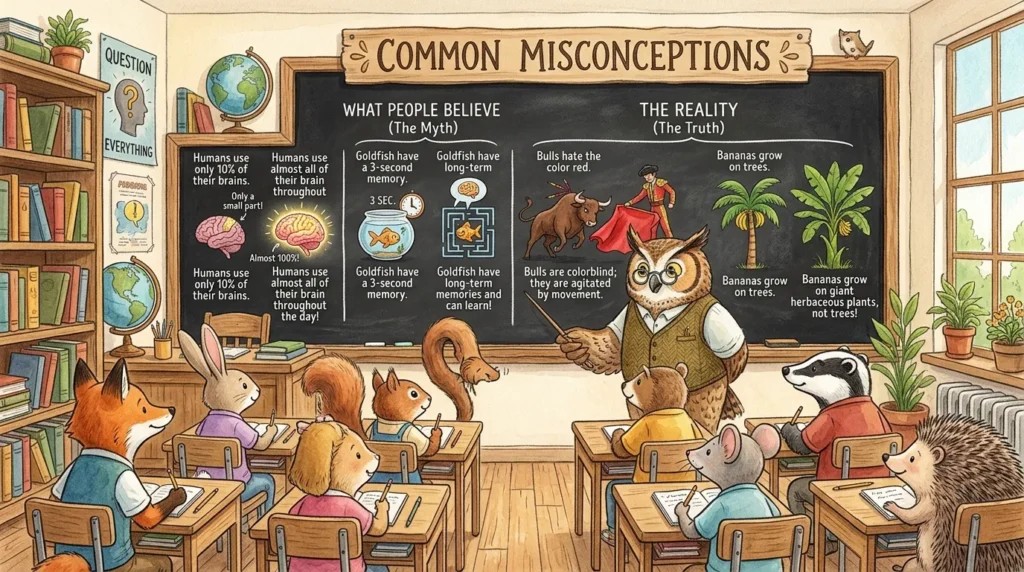
Many people misunderstand italics. Here are common myths:
- Italics mean sarcasm only – Not always. They mainly indicate emphasis.
- Italics and bold mean the same thing – No. Bold is stronger and more attention-grabbing.
- Italics are unprofessional – Actually, they are widely accepted in academic and business writing.
- You should italicize everything important – Overusing italics reduces their impact.
Using italics correctly improves readability rather than distracting from it.
Similar Terms & Alternatives
Several formatting styles are often confused with italics:
- Bold text – Strong emphasis
- Underlined text – Traditionally used for hyperlinks
- ALL CAPS – Indicates shouting or urgency
- Quotation marks – Show speech or titles
Each has a different purpose. Italics are usually more subtle and refined.
How to Respond to Italicized Text
When someone uses italics in chat, consider the tone:
If they say:
- I’m fine. → They may not actually be fine.
- I love that. → Could mean genuine enthusiasm or sarcasm (depending on context).
Respond thoughtfully:
- “Are you sure you’re okay?”
- “Haha, what do you mean by love?”
Understanding tone prevents miscommunication.
Differences from Similar Words
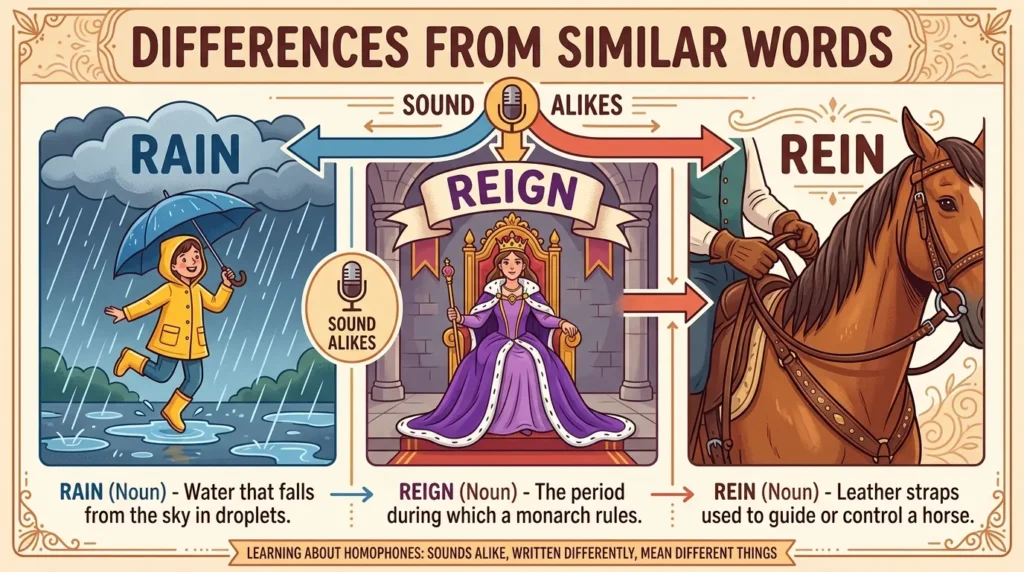
Italics differ from:
- Emphasis – A function (italics create emphasis).
- Formatting – A general term; italics are one type.
- Typography – The broader study of text design.
While bold and underline are formatting styles, italics specifically tilt letters to signal distinction or stress.
Relevance in Online Conversations & Dating Apps
On dating apps and online chats, italics can subtly change meaning.
For example:
- I might be free tonight. (uncertainty)
- You’re interesting. (could be playful or sarcastic)
Because tone is hard to read in text-based conversations, italics help clarify intent. However, overusing them can seem dramatic.
In digital relationships, small formatting choices often influence perception.
Living My Life in Italics Meaning
The phrase “living my life in italics” is a metaphor that suggests living in a unique, unconventional, or expressive way. Just as italic text stands out from regular writing, someone who says they are “living their life in italics” is often expressing that they do not follow the crowd and choose to live according to their own style, personality, or values.
The expression is commonly used on social media, in captions, and creative writing to describe a life filled with individuality, creativity, or memorable experiences. Rather than having a literal meaning, it symbolizes embracing authenticity, taking risks, and living boldly instead of blending into the background.
What Does Italics Mean?
Italics are a style of writing in which the letters are slanted to the right. This text format is commonly used to emphasize words, highlight important information, indicate titles of books or movies, or show foreign words and phrases. For example, in the sentence “I really meant that,” the italicized word really adds emphasis to the statement.
Beyond typography, italics can also be used figuratively in expressions like “living my life in italics.” In this context, italics symbolize standing out, being different, or living in a unique and expressive way. Whether used in writing or as a metaphor, italics help draw attention and give extra meaning to words or ideas.
Italics Definition and Examples
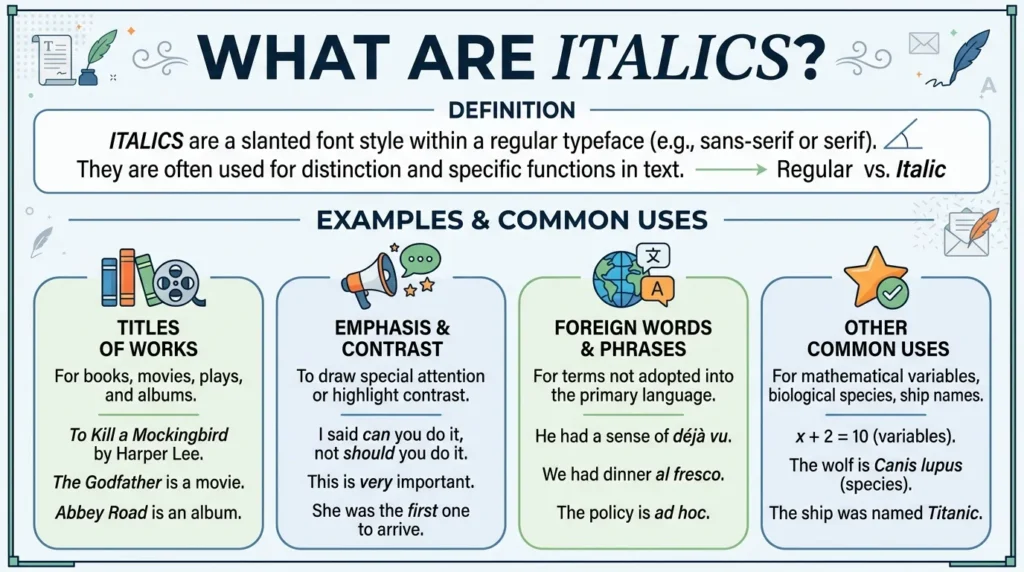
Italics are a text style in which letters are slanted to the right to make certain words or phrases stand out. They are commonly used to add emphasis, indicate the titles of books, movies, newspapers, and works of art, or highlight foreign words and special terms. Italics help readers quickly recognize that a word or phrase has special importance or a different purpose within a sentence.
For example, in the sentence “I really enjoyed the movie,” the word really is italicized to emphasize the speaker’s feeling. Likewise, titles such as Harry Potter or The Great Gatsby are often written in italics in formal writing. Overall, italics improve readability and make written communication clearer by drawing attention to important words or titles.
Conclusion
Understanding italics meaning in text helps you communicate more effectively in both casual and professional settings. Whether you’re emphasizing a word in a WhatsApp message, formatting a book title in an essay, or writing scientific variables in physics, italics serve a clear purpose.
They are not just decorative they shape tone, clarify meaning, and guide readers’ attention. Used correctly, italics enhance communication without overpowering it. Used incorrectly, they can confuse readers or dilute emphasis.
In today’s fast-paced digital world, mastering small formatting details like italics can make your writing clearer, more expressive, and more impactful.

H. G. Wells was a famous English writer known for his science fiction stories like The Time Machine and The War of the Worlds. His imaginative writing helped shape modern science fiction. Learn more interesting meanings, words, and explanations at Meaning Desk