Have you ever received a message that simply said “dw” and paused for a second trying to figure out what it meant? You’re not alone.
Text slang changes fast, and abbreviations like this show up everywhere from Snapchat streaks to casual late-night chats.
At first glance, “dw” might seem confusing, but once you know it, you’ll notice people use it all the time in friendly conversations.
Quick Answer:
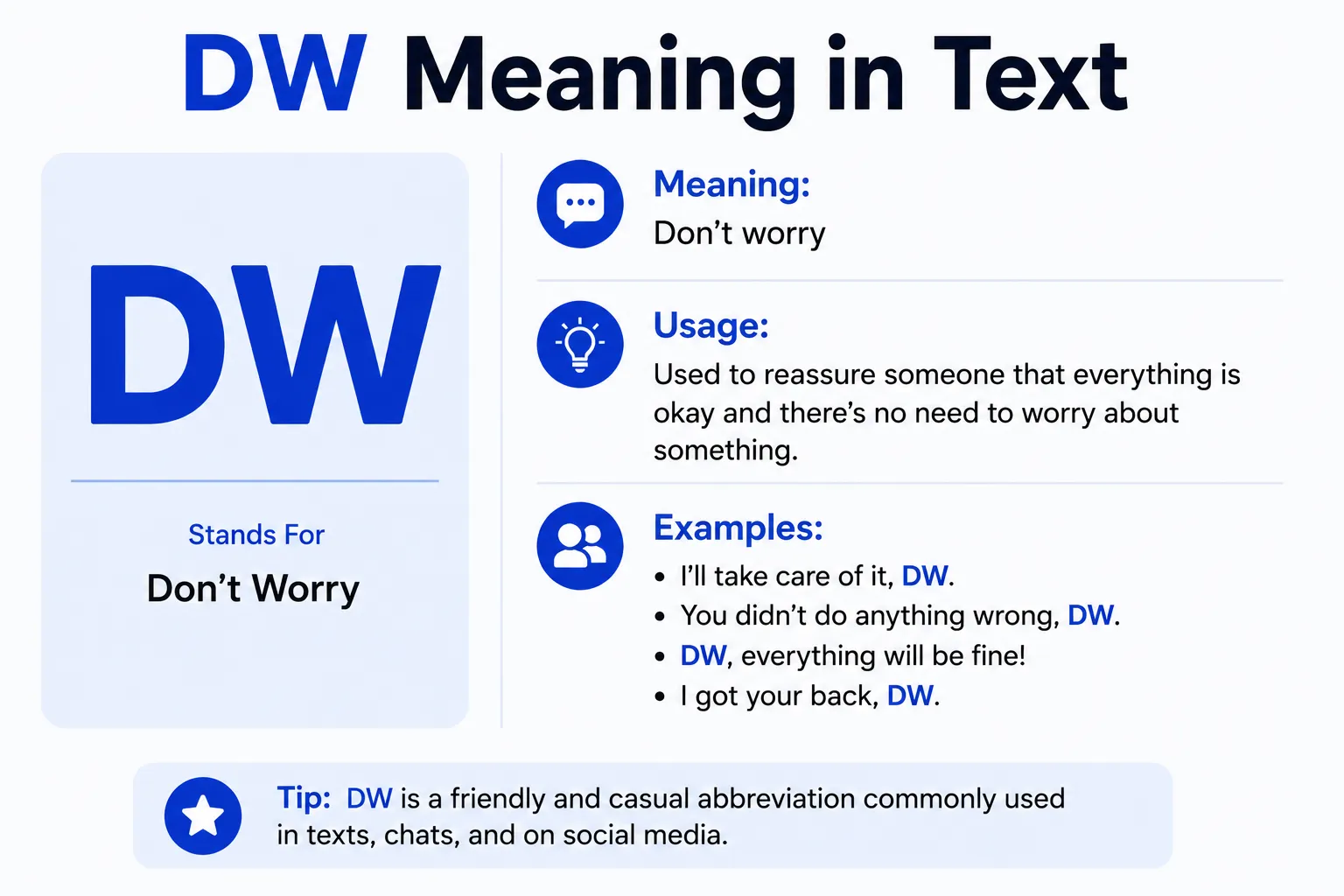
DW means “Don’t Worry.”
It’s a friendly and casual way of telling someone to relax, not stress, or stop overthinking something.
What Does DW Mean in Text?
In texting, DW stands for “Don’t Worry.” People use it to comfort someone, reassure them, or let them know that everything is okay.
It’s commonly used in casual conversations when someone apologizes, feels nervous, or worries about a situation.
For example:
- “sorry i replied late 😭”
- “dw, you’re good 👍”
In this example, “dw” reassures the other person that there’s no problem.
Simple Meaning of DW
- DW = Don’t Worry
- Tone: Friendly, casual, reassuring
- Used to calm or comfort someone
In short: DW = Don’t Worry = Relax, it’s okay.
Where Is DW Commonly Used? 📱
You’ll usually see “dw” in fast, casual online conversations.
Popular Places People Use DW
- 📱 Text messages
- 👻 Snapchat chats
- 🎵 TikTok comments & DMs
- 📸 Instagram messages
- 💬 Discord servers
- 🎮 Gaming chats
- 🐦 X/Twitter replies
- ❤️ Everyday friend conversations
Is DW Formal or Casual?
- ✅ Casual and social-media friendly
- ✅ Great for friends and family
- ⚠️ Not ideal for formal emails or professional communication
Examples of DW in Conversation 💬
Here are some realistic examples of how people use “dw” in texting.
Example 1
A: sorry i forgot to send the pic 😅
B: dw, send it later
Example 2
A: i think i messed up the game 😭
B: dw lol we still won
Example 3
A: im late again 😭
B: dw, we just got here too
Example 4
A: sorry for bothering u
B: dw about it 😊
Example 5
A: i hope ur not mad at me
B: dw, everything’s fine ❤️
Example 6
A: i accidentally deleted the message
B: dw i already read it
Example 7
A: i’m nervous about tomorrow
B: dw, you’ll do great 💪
These examples show that “dw” is mostly used to comfort, reassure, or calm someone.
When to Use and When Not to Use DW 🕓
Even though “dw” is common online, there are situations where it fits better than others.
✅ When To Use DW
Use “dw” when:
- Talking with friends
- Comforting someone
- Keeping chats casual
- Reassuring a person
- Responding quickly in text
- Chatting on social media
❌ When Not To Use DW
Avoid using “dw” when:
- Writing professional emails
- Talking in serious situations
- Messaging teachers or clients formally
- Communicating during emergencies
- Speaking in highly respectful settings
DW Usage Comparison Table
| Context | Example Phrase | Why It Works |
|---|---|---|
| Friend Chat | “dw about it 😄” | Casual & friendly |
| Gaming Chat | “dw we got this” | Relaxed team vibe |
| Family Text | “dw mom, im safe” | Reassuring |
| Work Chat | “Take your time.” | More professional |
| “Please don’t worry about the delay.” | Formal & clear |
Similar Slang Words or Alternatives 🔄
There are many other slang terms people use that have a similar tone to “dw.”
| Slang | Meaning | When to Use |
|---|---|---|
| NVM | Never Mind | When something no longer matters |
| IDC | I Don’t Care | Casual conversations |
| TBH | To Be Honest | Sharing honest opinions |
| IMO | In My Opinion | Giving personal thoughts |
| BRB | Be Right Back | Leaving a chat briefly |
| NP | No Problem | Reassuring or forgiving someone |
These abbreviations are also popular in texting and social media culture.
Why Do People Use DW So Much?
People like using short slang because it saves time and keeps conversations relaxed. Instead of typing “don’t worry about it,” typing “dw” feels quicker and more natural in casual chats.
It also creates a warm and comforting tone. When someone is stressed or apologizing, a quick “dw” can instantly make the conversation feel lighter.
For example:
- “sorry for the mistake”
- “dw 😊”
SFS Meaning in Text Explained Simply ✨
Is DW Positive or Negative?
“DW” is almost always positive.
It’s meant to:
- Reduce stress
- Comfort someone
- Show understanding
- Keep things friendly
Unlike rude slang or sarcasm, “dw” usually carries a kind and reassuring vibe.
However, tone still matters. If someone replies with only “dw.” and nothing else, it can sometimes feel cold depending on the situation. Emojis or extra words usually make it sound friendlier.
Example:
- “dw ❤️” → warm and caring
- “dw.” → short and neutral
Should You Use DW in Real Life?
Yes — if the conversation is casual.
It’s perfect for:
- Friends
- Siblings
- Gaming buddies
- Online chats
- Social media replies
But in professional settings, writing the full phrase “don’t worry” sounds more polished and respectful.
For example:
- Casual: “dw about it”
- Professional: “Please don’t worry about it.”
Both mean the same thing, but the tone changes.
FAQs :
What does DW stand for in texting?
DW stands for “Don’t Worry.”
Is DW rude?
No, it’s usually friendly and reassuring.
Can DW be used on Snapchat?
Yes, it’s very common on Snapchat and other social apps.
Does DW mean “deal with”?
Sometimes in different contexts, DW could mean other things, but in texting it almost always means “Don’t Worry.”
Is DW formal?
No, it’s considered casual internet slang.
Can I use DW in work messages?
It’s better to type “don’t worry” in professional settings.
Why do people type DW instead of don’t worry?
It’s shorter, faster, and fits casual texting culture.
Is DW used by younger people?
Yes, teens and young adults use it frequently online.
What’s the difference between DW and NP?
DW reassures someone emotionally, while NP (“No Problem”) responds to thanks or apologies.
Can DW sound caring?
Absolutely. It often sounds comforting and supportive.

Oscar Wilde was a famous Irish writer, poet, and playwright known for his witty quotes and classic works like The Picture of Dorian Gray. His writing style was clever, humorous, and thought-provoking. At MeaningDesk, we share the meanings, history, and interesting facts behind words, names, and cultural topics to help readers understand them easily.