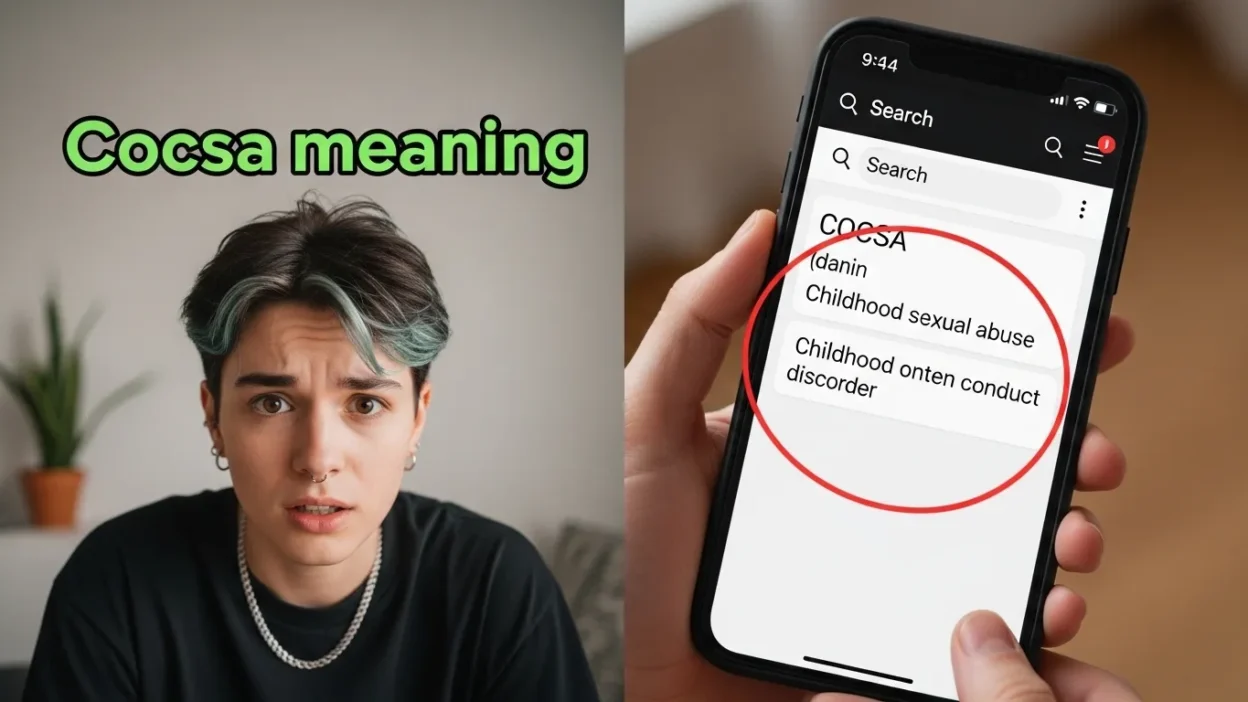
If you’ve recently come across the term and searched for COCSA meaning TikTok, you’re likely trying to understand a serious and sensitive topic. TikTok and other social platforms often introduce abbreviations that spread quickly through hashtags, awareness videos, or educational content. While some slang terms are playful, others—like COCSA—carry important social and psychological meaning.
COCSA is not casual internet slang. It refers to a real-world issue discussed in educational, mental health, and advocacy spaces. Because the term appears in short-form videos without detailed explanations, many users search for its full meaning and context. Understanding what it stands for, how it’s used, and the seriousness behind it helps avoid misunderstandings. This guide explains the definition, background, digital usage, misconceptions, and relevance in online conversations in a clear and respectful way.
Callous Meaning in Text: Definition, Examples Misconceptions
Meaning & Definition
The phrase COCSA meaning TikTok refers to understanding the abbreviation COCSA, which stands for Child-On-Child Sexual Abuse. It is a term used in psychology, child protection, and social work fields to describe harmful sexual behavior between minors.
Unlike typical slang terms on social media, COCSA is not humorous or casual. It is used in educational and awareness contexts to discuss:
- Prevention
- Survivor support
- Mental health impacts
- Child safeguarding policies
On TikTok, the term may appear in videos where creators share personal stories, raise awareness, or discuss trauma recovery. Because TikTok captions are often brief, viewers may see “COCSA” without explanation and search for its meaning.
It’s important to approach this term with sensitivity. COCSA is used in professional and advocacy spaces to distinguish child-on-child harm from adult-child abuse, as the dynamics, causes, and interventions can differ.
Understanding the definition helps prevent misuse of the term and ensures respectful discussion online.
Background
The abbreviation COCSA developed within child protection and psychological research communities. Professionals needed a specific term to describe inappropriate or abusive sexual behavior occurring between minors, particularly when there is a power imbalance, coercion, or harm involved.
Historically, discussions about child safety focused primarily on adult perpetrators. However, research and safeguarding practices recognized that harmful behaviors can also occur between children, requiring different prevention strategies and responses.
With the rise of social media platforms like TikTok, survivors and advocates began sharing educational content. Short-form videos made complex topics more accessible, but they also introduced acronyms that many users were unfamiliar with.
As awareness movements grew, especially around mental health and trauma recovery, terms like COCSA became more visible. The increase in online advocacy contributed to more people searching for “COCSA meaning TikTok.”
The background of the term is rooted in professional child welfare and psychological studies—not internet slang culture.
Usage in Different Contexts (Chat, Social Media, Professional Fields)
In Professional Fields
COCSA is primarily used in:
- Psychology
- Social work
- Child protective services
- Educational safeguarding policies
Professionals use the term in documentation, training materials, and prevention programs.
On Social Media
On TikTok and Instagram, creators may:
- Share survivor experiences
- Provide educational information
- Offer mental health resources
- Raise awareness about prevention
Hashtags might include #COCSAawareness or #traumarecovery.
In Casual Chat
The term is rarely used casually. If it appears in private messages, it is usually within serious conversations about personal experiences or educational discussions.
Context is critical. Unlike typical trending slang, COCSA should not be used jokingly or loosely.
Meaning in Chat, WhatsApp, Instagram, TikTok
Uso Meaning Definition, Background, How Used in Text & Online
TikTok
On TikTok, the term often appears in:
- Educational explainer videos
- Survivor storytime posts
- Trauma healing content
Because TikTok limits caption space, the abbreviation is used instead of the full phrase.
In posts or reels focused on awareness:
- Infographics
- Mental health discussions
- Advocacy campaigns
WhatsApp or Private Chat
If mentioned in personal conversations, it typically indicates a serious discussion. Sensitivity and empathy are essential in such contexts.
The term does not carry alternative slang meanings on these platforms. It remains consistent in its definition.
Meaning in Physics, Medical, and Aircraft Terminology
COCSA does not have recognized meanings in:
- Physics
- Engineering
- Aviation terminology
However, in medical and psychological fields, it is associated with:
- Trauma-informed care
- Behavioral assessment
- Safeguarding practices
It is not used in technical scientific equations or aircraft documentation. Its relevance is specific to mental health and child protection contexts.
Common Misconceptions
- It’s TikTok slang – It is not slang; it is a serious professional term.
- It refers to consensual behavior – The term specifically addresses harmful or abusive conduct.
- It’s a trending joke term – It should never be treated humorously.
- It only applies in extreme cases – Even non-violent coercive situations can fall under this term in safeguarding contexts.
Understanding these misconceptions prevents harmful misinterpretation.
Similar Terms & Alternatives
Italics Meaning in Text – Complete to Definition, Usage & Context
Related terms may include:
- Peer-on-peer abuse
- Child sexual abuse (CSA)
- Harmful sexual behavior (HSB)
Each term has slightly different definitions in professional settings. COCSA specifically highlights that both individuals involved are minors.
How to Respond to It
If someone mentions COCSA in conversation:
- Respond with empathy and respect.
- Avoid dismissive or judgmental reactions.
- Encourage seeking professional support if appropriate.
- Do not ask invasive questions.
If discussing educational content:
- Focus on awareness and prevention.
- Use accurate terminology.
Handling the term responsibly is essential.
Differences from Similar Words
- CSA (Child Sexual Abuse) – Usually implies adult-to-child abuse.
- Peer abuse – Broader term that may include non-sexual harm.
- HSB (Harmful Sexual Behavior) – Describes behaviors rather than specific incidents.
COCSA specifically identifies the age group of both individuals involved.
Relevance in Online Conversations & Dating Apps
The term is generally not relevant in dating app conversations. However, in online advocacy communities or trauma support spaces, it may appear in awareness discussions.
On platforms focused on relationships, sensitive topics sometimes emerge when users share personal histories. If this term arises, respectful and supportive communication is crucial.
Digital spaces have increased awareness of trauma-related topics, making accurate understanding more important than ever.
Conclusion
Understanding COCSA meaning TikTok is important because the term refers to a serious child protection issue rather than casual internet slang. Originating in professional safeguarding and psychological fields, COCSA stands for Child-On-Child Sexual Abuse and is used in educational, advocacy, and mental health contexts.
Its presence on TikTok reflects broader conversations about trauma awareness and prevention. While social media has helped spread information, it has also created confusion due to abbreviated captions. By learning the correct definition, recognizing common misconceptions, and responding with sensitivity, individuals can engage in informed and respectful discussions. Clear understanding ensures that serious topics are treated with the care they deserve in both online and offline conversations.

H. G. Wells was a famous English writer known for his science fiction stories like The Time Machine and The War of the Worlds. His imaginative writing helped shape modern science fiction. Learn more interesting meanings, words, and explanations at Meaning Desk