Ever read a reply that just says “ofc” and felt slightly judged for asking? 😄
Three letters, no emoji, and suddenly you’re questioning the vibe.
Welcome to OFC text meaning, where “yes” can sound super friendly or quietly confident.
It’s the kind of reply people send while multitasking and sipping coffee.
Simple, fast, and way more expressive than it looks.
Let’s decode it so you stop guessing and start replyi
Quick Answer:
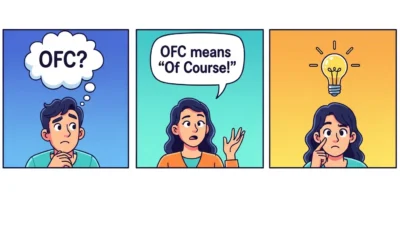
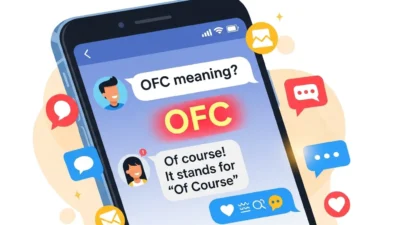
OFC means “Of Course.” It’s a casual and friendly way of saying yes, definitely, or obviously in text messages and online chats.
What Does OFC Mean in Text?
In texting, OFC is simply the shortened version of “of course.” People use it to reply quickly and casually without typing the full phrase. It usually shows agreement, confirmation, or reassurance.
Example:
“are you coming later?”
“ofc 👍”
Depending on context, it can sound:
- Friendly
- Confident
- Reassuring
- Slightly sarcastic (rare, but possible)
In short:
OFC = Of Course = Yes / Definitely / Obviously
Where Is OFC Commonly Used? 📱
You’ll mostly see OFC in informal and social settings, such as:
- 💬 Text messages
- 📸 Snapchat chats
- 📱 Instagram DMs
- 🎵 TikTok comments
- 🎮 Gaming chats
- 🧑🤝🧑 Group chats
Formality level:
- ✅ Casual
- ❌ Not formal
- ✅ Social-media friendly
👉 It’s best avoided in professional or serious conversations.
Examples of OFC in Conversation 💬
Here are some realistic chat examples showing how OFC is commonly used:
Example 1
A: “can you help me later?”
B: “ofc 😊”
Example 2
A: “are we still meeting today?”
B: “ofc”
Example 3
A: “did you understand the plan?”
B: “ofc 👍”
Example 4
A: “will you send the files?”
B: “ofc, give me a sec”
Example 5
A: “you got my back, right?”
B: “ofc ❤️”
Example 6
A: “you coming to the party?”
B: “ofc lol”
Meaning of OFC in English-Speaking Countries 🌍
| Country | Meaning of OFC | Tone & Usage |
|---|---|---|
| 🇺🇸 USA | Of course | Casual, confident |
| 🇬🇧 UK | Of course | Informal, friendly |
| 🇨🇦 Canada | Of course | Polite, relaxed |
| 🇦🇺 Australia | Of course | Very casual |
| 🇮🇳 India | Of course | Common in texting |
| 🇵🇰 Pakistan | Of course | Mostly online/chat use |
👉 Across countries, the meaning stays the same, but the tone may feel more relaxed or playful depending on the culture.
When to Use and When Not to Use OFC 🕓
✅ When to Use OFC
- Chatting with friends
- Casual conversations
- Quick replies
- Social media comments
- Group chats
❌ When Not to Use OFC
- Work emails
- Professional messages
- Serious or emotional conversations
- Talking to clients or seniors
Comparison Table
| Context | Example Phrase | Why It Works |
|---|---|---|
| Friend Chat | “ofc 😄” | Casual & friendly |
| Group Chat | “ofc i’m in” | Quick confirmation |
| Work Chat | “Yes, I will.” | Professional tone |
| “Of course, I’ll review this.” | Formal & clear |
Similar Slang Words or Alternatives 🔄
| Slang | Meaning | When to Use |
|---|---|---|
| sure | Yes / okay | Casual or semi-formal |
| yup | Yes | Friendly chats |
| yeah | Yes | Everyday texting |
| definitely | Strong yes | Slightly serious |
| obviously | Clear yes | Can sound confident |
| yep | Short yes | Informal replies |
FAQs About OFC ❓
What does OFC stand for in text?
OFC stands for “Of Course.”
Is OFC rude?
No, but in some contexts it can sound slightly sarcastic if the tone isn’t clear.
Is OFC flirty?
It can be, especially when paired with emojis or affectionate messages.
Is OFC formal?
No. It’s informal slang and best for casual use.
Can I use OFC at work?
It’s better to write “of course” instead in professional settings.

H. G. Wells was a famous English writer known for his science fiction stories like The Time Machine and The War of the Worlds. His imaginative writing helped shape modern science fiction. Learn more interesting meanings, words, and explanations at Meaning Desk