Ever get a text that just says “mhm” and suddenly you’re overthinking everything?
Like… is that a yes, a bored yes, or a please stop talking yes?
I once replied with a whole paragraph just to an “mhm” and instantly regretted it.
That’s when I realized this tiny reply carries way too much power.
So let’s clear the confusion once and for all with MHM meaning in text, explained like a normal human conversation.
No drama, no guessing just what it actually means when someone types it.
✨ Quick Answer:
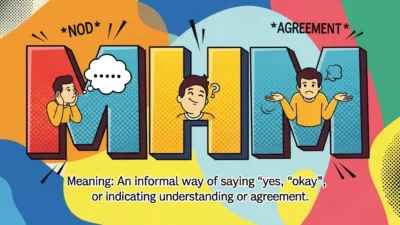
MHM means “yes” or “I agree.”
It’s a casual, relaxed, and sometimes neutral way of saying okay, yeah, or uh-huh in text conversations.
🧠 What Does MHM Mean in Text?
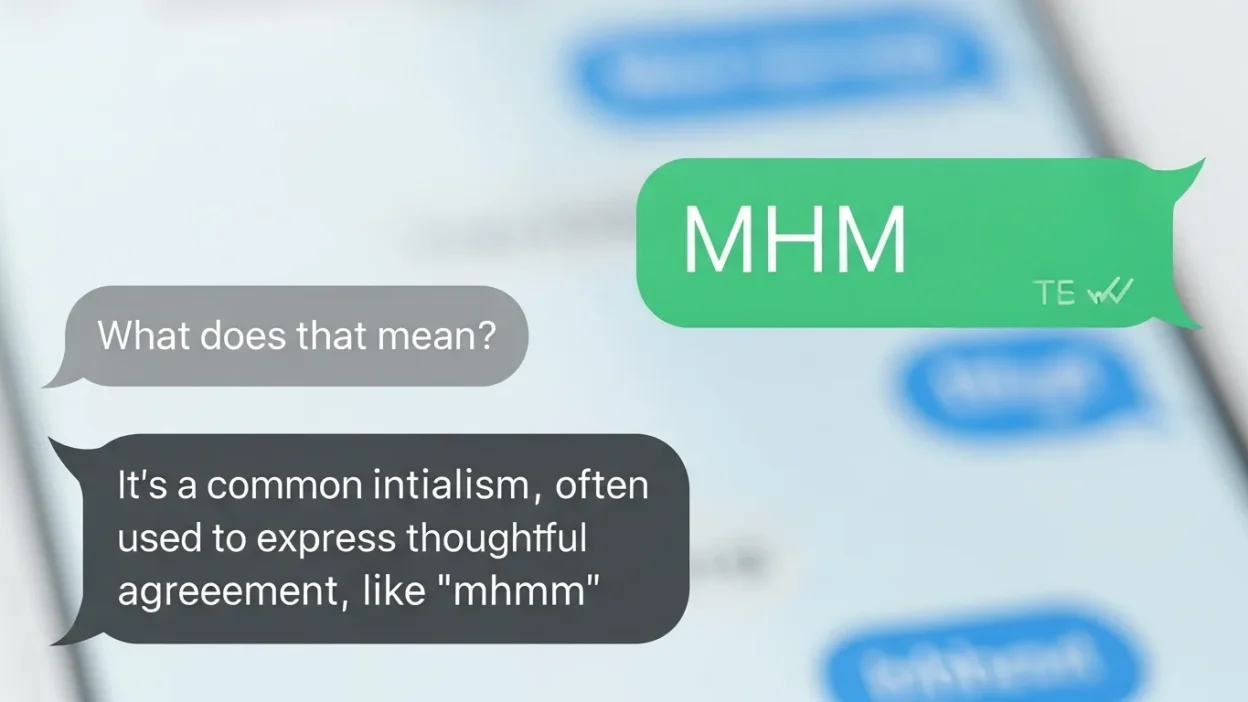
In texting, MHM is a written version of the sound “mm-hmm.”
People use it to show agreement, acknowledgment, or mild confirmation—often without much emotion.
📌 Simple example:
A: Did you understand the instructions?
B: mhm
It usually means “yes,” “I hear you,” or “I agree,” but it can also sound indifferent depending on context.
➡️ In short:
MHM = Mm-hmm = Yes / I agree / Okay
📱 Where Is MHM Commonly Used?
You’ll see MHM most often in casual, everyday digital chats:
- 💬 Text messages & SMS
- 📸 Instagram DMs
- 👻 Snapchat
- 💻 Discord & gaming chats
- 😂 TikTok comments
- 📱 WhatsApp & Messenger
✨ Tone & formality:
- Very casual
- Low-effort reply
- Friendly or neutral
- ❌ Not formal or professional
It’s best saved for informal conversations.
💬 Examples of MHM in Conversation
Here are realistic chat examples showing how MHM is actually used:
1️⃣
A: you coming later?
B: mhm 👍
2️⃣
A: did u eat already?
B: mhm 😌
3️⃣
A: so we meet at 7?
B: mhm works for me
4️⃣
A: you’re listening, right?
B: mhm 😅
5️⃣
A: you agree with this plan?
B: mhm yeah
6️⃣
A: that movie was boring
B: mhm kinda 😴
7️⃣
A: u sure about this?
B: mhm.
👉 Notice how punctuation or emojis can change the tone—from friendly to uninterested.
🌍 Meaning of MHM in English-Speaking Countries
| Country | Meaning of “MHM” | Notes |
|---|---|---|
| United States 🇺🇸 | Yes / Uh-huh | Very common |
| United Kingdom 🇬🇧 | Yes / Agreement | Casual chats |
| Canada 🇨🇦 | Yes | Neutral confirmation |
| Australia 🇦🇺 | Yeah / Mm-hmm | Informal use |
| New Zealand 🇳🇿 | Agreement | Same meaning |
| Worldwide | Yes | Mostly online slang |
There are no major regional differences—MHM means roughly the same everywhere.
🕓 When to Use and When Not to Use MHM
✅ When to Use MHM
- Casual chats with friends
- Quick confirmations
- Low-effort replies
- When you agree but don’t want to elaborate
- Relaxed conversations
❌ When Not to Use MHM
- Work or professional chats
- Emails
- Serious or emotional conversations
- When clarity is important
- Talking to teachers, clients, or bosses
Context Comparison Table
| Context | Example Phrase | Why It Works |
|---|---|---|
| Friend Chat | “mhm 😄” | Casual & relaxed |
| Work Chat | “Yes, that works.” | Clear & professional |
| “I agree with the proposal.” | Formal & precise |
🔄 Similar Slang Words or Alternatives
| Slang | Meaning | When to Use |
|---|---|---|
| yeah | Yes | Everyday chats |
| yup | Yes | Casual agreement |
| uh-huh | Yes | Informal tone |
| ok | Okay | Neutral response |
| bet | Agreement | Youth slang |
| k | Okay | Very short reply |
Each option carries a slightly different tone—some warmer, some colder.
❓ FAQs About MHM
Q1: Is MHM rude?
Not usually, but it can sound uninterested if used alone with no emoji or follow-up.
Q2: Does MHM always mean yes?
Most of the time, yes—but tone matters.
Q3: Can MHM be sarcastic?
Yes. Context and punctuation (like “mhm.”) can make it sound dismissive.
Q4: Is MHM flirty?
Not really. It’s neutral unless paired with flirty context or emojis.
Q5: Should I use MHM in professional settings?
No—use full words like yes or I agree instead.
🎯 Final Takeaway
MHM is a simple, casual way to say “yes” or “I agree” in text.
It’s perfect for relaxed chats but can feel cold if overused or used in serious conversations.
When in doubt, add an emoji—or use a full sentence.
Now when someone texts you “mhm,” you’ll know exactly what they mean 😉
H. G. Wells was a famous English writer known for his science fiction stories like The Time Machine and The War of the Worlds. His imaginative writing helped shape modern science fiction. Learn more interesting meanings, words, and explanations at Meaning Desk